If it is the color of coffee with milk, somebody has probably told you that is a job for a service company. If the weeds are closing in, same thing. If your fish came up dead one August morning, same thing again.
Last year a man in a clean truck walked a bank like yours with a clipboard. He took a sample, he wrote a number, and the water stayed the same color it was. But the bill did not stay the same. Here is what that trade runs, by the year:
| One service call | $250 to $450 |
| Four visits, a normal year | about $2,000 |
| Chemicals and application, per acre | $300 to several thousand |
| Ten years of that | $20,000 and up |
| This book, once | $49 |
The dose that fixes clay water sits on free state handouts. Missouri prints it. Mississippi State prints it. Auburn prints it. There is simply no repeat business in a sack of gypsum, so nobody with a route truck is going to hand it to you. This book does.
GET MY COPY — $49 →
7-day money-back guarantee. Keep the book either way.

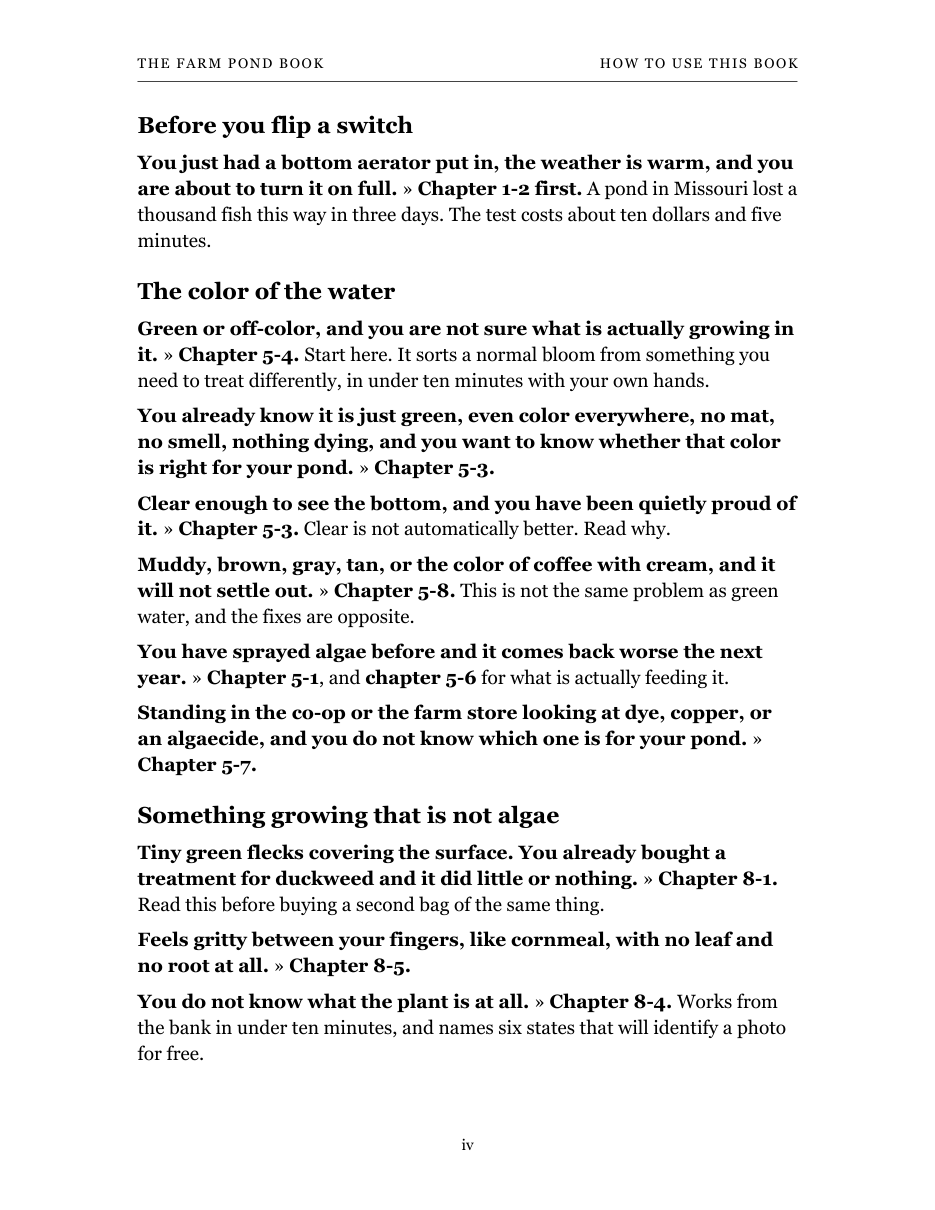
Most pond problems are one of a dozen patterns, and each one has a diagnostic you can run yourself, standing on your own bank, usually with a jar, a stick, or a white lid. Once you know which pattern you have, the fix is mostly farm-store material and a Saturday.
Every chapter starts the same way: how to confirm this is YOUR problem, before you spend a dollar on it. That one habit is worth more than the rest of the book.
Every number in it traces to a state extension service or a wildlife agency. Where two states disagree, and they genuinely do, the book names both and tells you how to know which applies to your pond. Sellers are quoted on prices only, never on whether a thing works.


Plus a 50-state appendix, stocking tables, a seasonal calendar, a what-to-buy guide, a glossary, a pond log workbook you can photocopy, and a full index.
It will not drain a pond, run an excavator, or pull a permit for you. It will not replace a biologist on a genuinely sick lake, and it says so, in print, in the chapters where that is the honest answer.
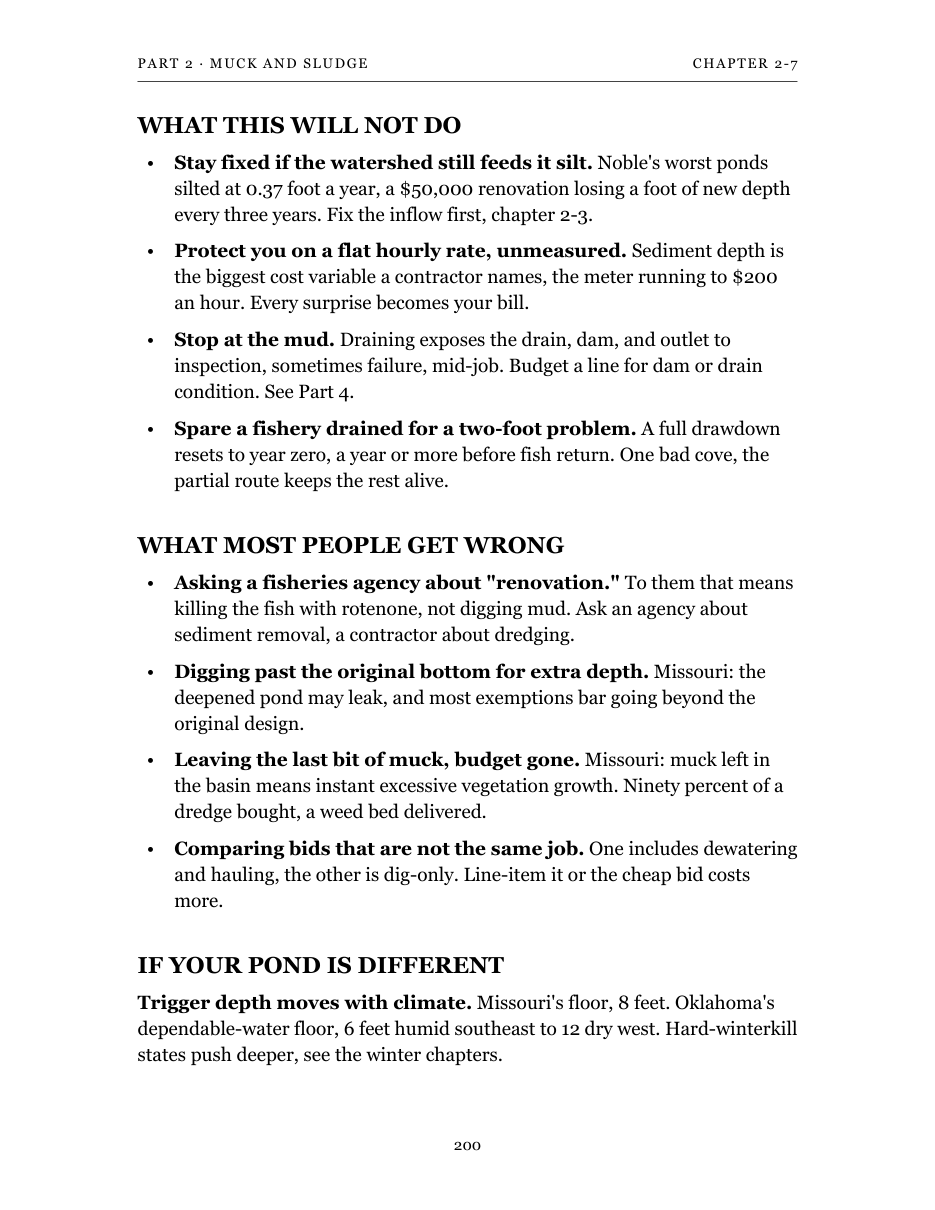
Every method in it carries a section called what this will not do. Naming where a method fails is the strongest signal that the rest is true. That is the standard the whole book is written to.
My name is Ezra Crane. My family has worked the same ground in Middle Tennessee for four generations, and there has been a pond in the bottom field since my grandfather Wyatt dug it in 1951. I have not put a chemical in it in eighteen years. No aerator, no algaecide, no management contract.
I am not against the pond trade. There is honest work in it. But most of what a farm pond needs is not a contract. It is a diagnosis, a sack of something from the co-op, and the patience to leave the water alone while it works.
If it is a farm or homestead pond from a quarter acre to a few acres, yes, that is exactly what it is written for. If it is a 40-acre lake with a dam inspection problem, you need an engineer, and the book will tell you the same thing.
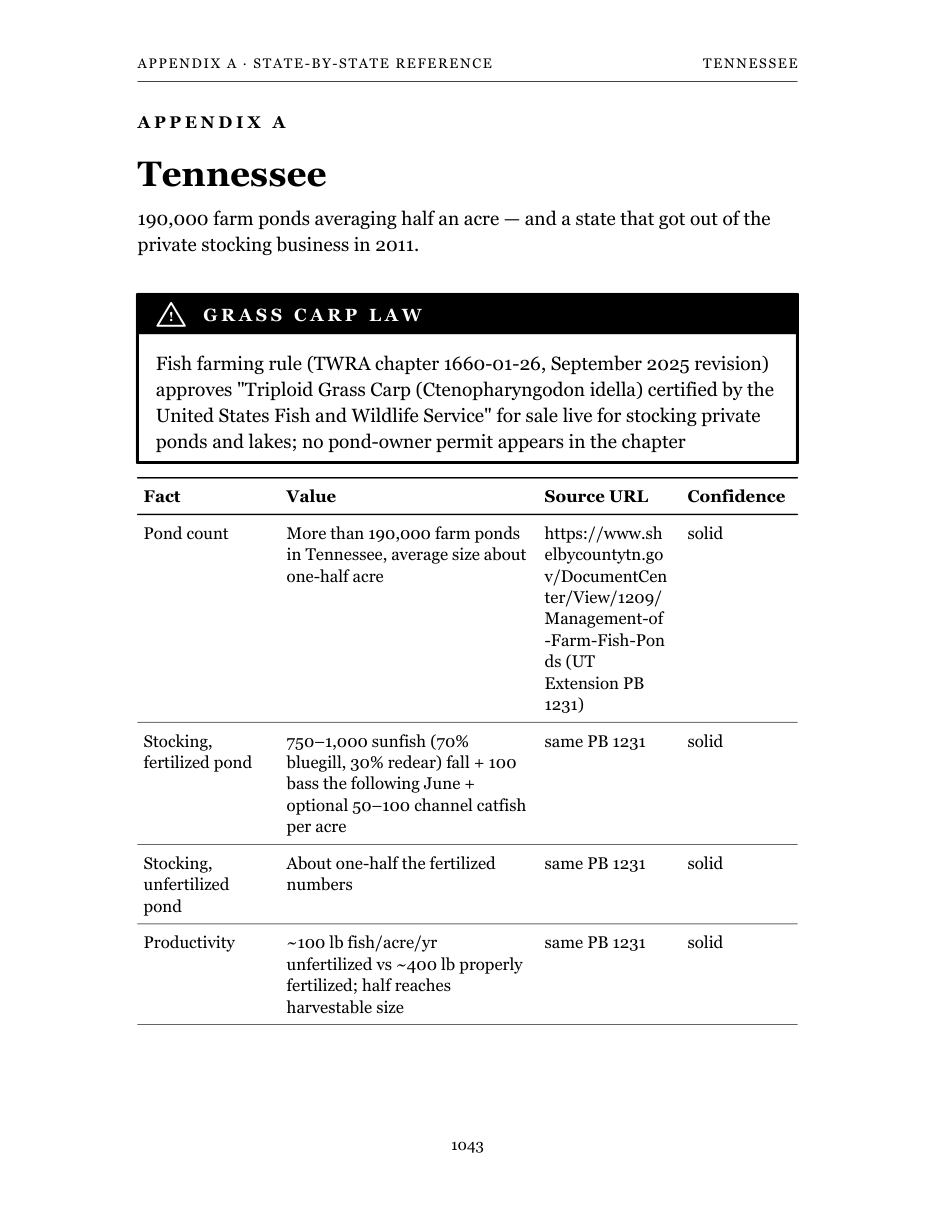
Yes. Appendix A walks all 50 states: stocking rates, grass carp permit rules, your agency's phone number, climate notes. Where states disagree on a method, the chapter says so and tells you how to pick.
You will know some of it, and you will be the fastest reader it has. The value for you is the diagnostics and the numbers, every one sourced, in one place, with an index. Thirty years of owning a pond usually means thirty years of guessing on two or three stubborn problems. Those chapters are why this book exists.
It is built in large print on purpose, and it prints clean on a home printer in black and white. If it still does not suit your eyes, use the guarantee. You keep the book either way.
When the book is revised, every buyer gets the new file by email, free, for life. No subscription, nothing to manage.
EZRA CRANE · THE FARM POND BOOK
Results vary by pond, region, and season. This book is educational material. It does not replace an engineer on dam safety, a licensed applicator where your state requires one, or a biologist on a genuinely sick waterbody, and it tells you when to call each.
© Ezra Crane. All rights reserved.